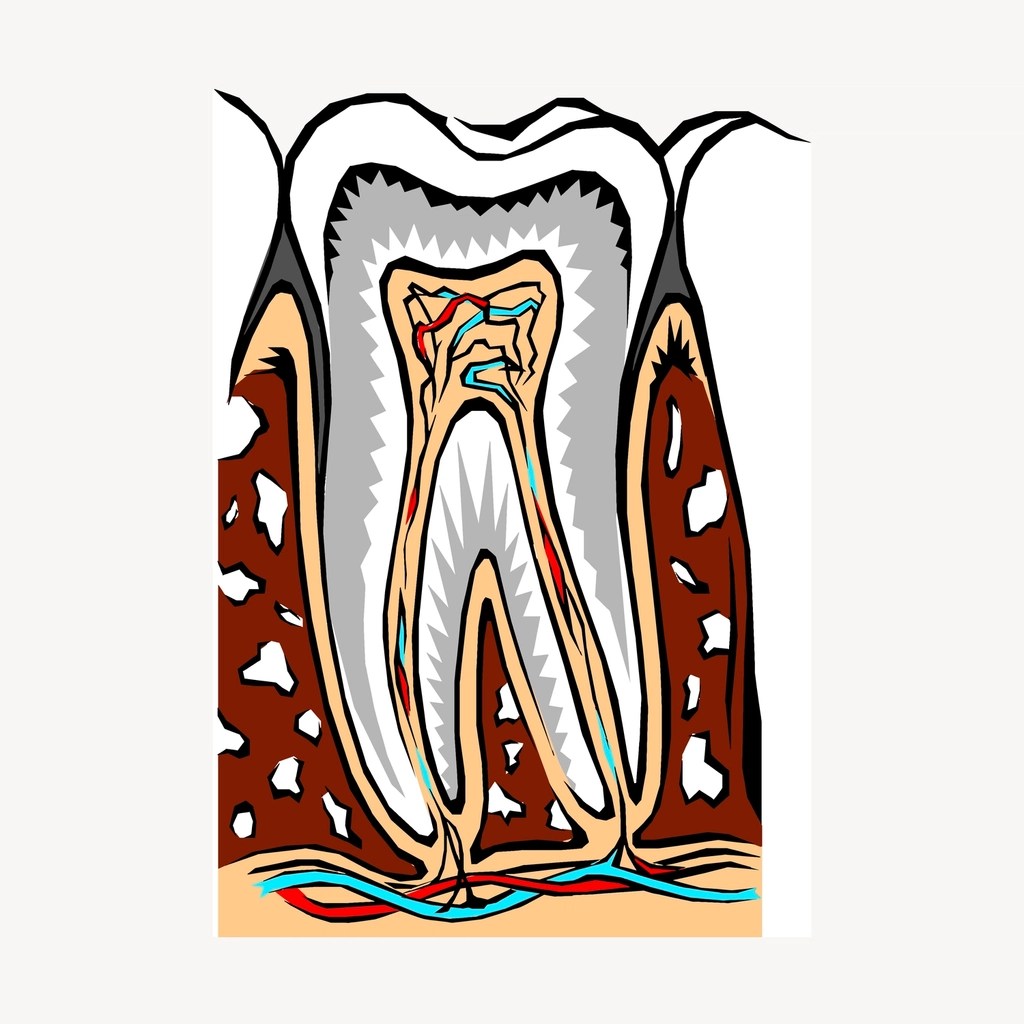
Sodium hypochlorite remains the standard irrigant in endodontics because it provides both broad-spectrum antimicrobial activity and organic tissue dissolution. Successful root canal treatment depends on eliminating microorganisms and removing pulpal remnants, both of which are enhanced by the use of sodium hypochlorite.
Sodium hypochlorite has been used as an endodontic irrigant for decades. A 1992 study evaluated the efficacy of different NaOCl concentrations for the removal of organic tissue. The study found no statistically significant difference in the removal of pulpal remnants in the middle third of root canals between 5.25%, 2.5%, and 1% NaOCl, although all three concentrations were superior to 0.5%. These findings support the established ability of NaOCl to dissolve organic tissue.1
Clinically, the concentration of sodium hypochlorite used for irrigation varies by practice and region, with concentrations commonly ranging from approximately 0.5% to 6%. A laboratory-based experimental study published in 2010 evaluated the ability of 1.3%, 2.5%, and 5.25% NaOCl to eliminate Enterococcus faecalis at exposure times ranging from 5 to 40 minutes. At 40 minutes, 1.3% and 2.5% NaOCl were unable to eliminate the strain of E. faecalis used in the study, whereas 5.25% NaOCl achieved complete elimination. Although this experimental model does not fully replicate the complexity of the clinical root canal system, the findings suggest that higher NaOCl concentrations may provide greater antimicrobial efficacy under certain laboratory conditions.2
However, laboratory antimicrobial activity does not necessarily translate into improved clinical outcomes. A 2019 clinical study compared root canal treatments using either 1% or 5% NaOCl throughout irrigation and evaluated clinical and radiographic healing every 3 months for 12 months. Although the 5% NaOCl group demonstrated a higher percentage of resolution, the difference between the groups was not statistically significant. This suggests that, despite differences in chemical activity between concentrations, higher NaOCl concentration alone may not result in improved clinical outcomes.3
What about cytotoxicity?
Although higher concentrations of sodium hypochlorite may provide greater antimicrobial activity and tissue-dissolution capacity, increasing the concentration also increases its potential for cytotoxicity. Sodium hypochlorite can cause significant tissue injury if it is expressed beyond the root canal system and contacts periapical tissues. This makes controlled delivery and careful irrigation technique essential.
Using the highest concentration available is not necessarily the best clinical approach. The potential benefits of increased concentration should be carefully balanced against the risk of tissue injury, particularly when clinical studies have not consistently demonstrated superior treatment outcomes with higher concentrations.
The Bottom Line
Sodium hypochlorite remains an essential component of endodontic irrigation because of its antimicrobial activity and ability to dissolve organic tissue. While laboratory evidence suggests that higher concentrations may provide greater antimicrobial and tissue-dissolution activity, current clinical evidence does not clearly demonstrate that higher concentrations translate into improved treatment outcomes.
The goal should not simply be to use the highest concentration possible. Effective irrigation depends on using NaOCl safely and effectively through adequate volume, contact time, and controlled delivery throughout the root canal system.
Resources:
- Baumgartner JC, Cuenin PR. Efficacy of Several Concentrations of Sodium Hypochlorite for Root Canal Irrigation. Journal of Endodontics, 18, 605-612.
- Retamozo B, Shabahang S, Johnson N …
Minimum Contact Time and Concentration of Sodium Hypochlorite Required to Eliminate Enterococcus faecalis
Journal of Endodontics, 36, 520-523 - Verma N, Sangwan P, Tewari S …
Effect of Different Concentrations of Sodium Hypochlorite on Outcome of Primary Root Canal Treatment: A Randomized Controlled Trial
Journal of Endodontics, 2019; 45, 357-363

