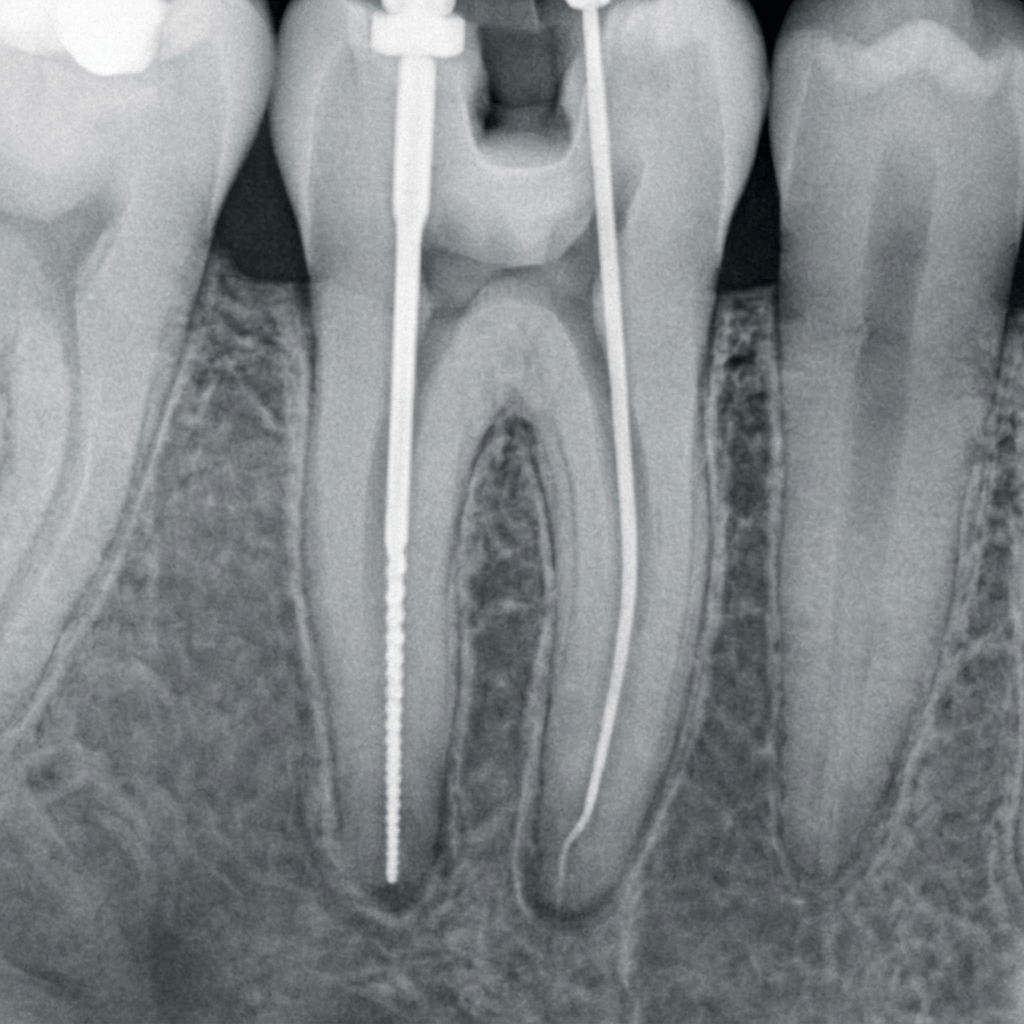
The size of the apical preparation is an important component of root canal treatment for a multitude of reasons. It impacts the effectiveness of both instrumentation and irrigation within the canal. The goal of instrumentation is not simply to create a larger apical preparation, but adequate enlargement is needed to allow instruments and irrigating solutions to reach areas difficult to clean. There are advantages and disadvantages to increasing the apical preparation size. Proposed benefits of a larger apical preparation include improved irrigant penetration, greater removal of infected dentin and debris, and more effective apical debridement. Possible disadvantages include increased risk of transportation and perforation, excessive dentin removal, and weakening of the root. This review will examine what the current literature tells us about apical preparation size and its relationship to endodontic treatment outcomes.1
The question of how large the apical portion of the canal should be prepared has been an ongoing controversy for decades, and for good reason. Eliminating microorganisms from the root canal system is a major component of successful endodontic therapy. The question remains: at what point does increasing the master apical file size (MAF) provide a potential benefit in treatment outcomes while limiting the disadvantages associated with removing additional tooth structure?1
A randomized controlled trial published in 2012 evaluated healing outcomes in canals prepared to MAF sizes that were 2, 3, 4, 5, and 6 sizes larger than the first apical binding file (FABF). Although the percentage of healed cases increased as the degree of apical enlargement increased, the group prepared only 2 sizes larger than the FABF demonstrated significantly less healing than the other groups. Further enlargement beyond 3 sizes larger than the FABF did not result in a statistically significant improvement in healing. These findings suggest that enlarging the preparation at least 3 sizes beyond the FABF may provide a favorable balance between adequate apical preparation and limiting unnecessary enlargement.3
Irrigation is another important factor in microorganism elimination and canal cleansing. Increasing the apical preparation size may improve the ability of irrigants to reach the apical portion of the canal. One study evaluating apical preparation size and irrigant delivery found that increasing the preparation from 35/.06 to 40/.04 significantly increased the volume of irrigant delivered to working length when using an apical negative-pressure irrigation system. Further increasing the preparation beyond 40/.06 did not result in a significant additional increase in irrigant volume. These findings suggest that increasing apical preparation size may improve chemical cleansing of the canal, but the benefit may reach a point of diminishing returns.2
Taken together, these findings suggest that increasing apical preparation size may provide benefits for both mechanical and chemical cleansing of the root canal system. The 2012 clinical trial suggests that preparation beyond the smallest apical enlargement may improve healing outcomes, while the irrigation study demonstrates that increasing preparation size can improve irrigant penetration at working length to a certain point. These findings do not establish a universal ideal apical preparation size. Every case presents unique clinical considerations, and there may be situations in which a more conservative or more extensive preparation is appropriate.
Ultimately, the clinician must balance the potential benefits of increased microorganism removal and improved irrigation with the potential disadvantages of removing additional dentin. More research is needed to better define the relationship between apical preparation size, treatment outcomes, and structural consequences.
Resources:
- Baugh D, Wallace J
The Role of Apical Instrumentation in Root Canal Treatment: A Review of the Literature
Journal of Endodontics, 31, 333-340 - de Gregorio C, Arias A, Navarrete N …
Effect of Apical Size and Taper on Volume of Irrigant Delivered at Working Length with Apical Negative Pressure at Different Root Curvatures
Journal of Endodontics, 2012; 39, 119-124 - Saini H, Tewari S, Sangwan P …
Effect of Different Apical Preparation Sizes on Outcome of Primary Endodontic Treatment: A Randomized Controlled Trial
Journal of Endodontics, 2012; 38, 1309-1315

